 4fa80ce74c
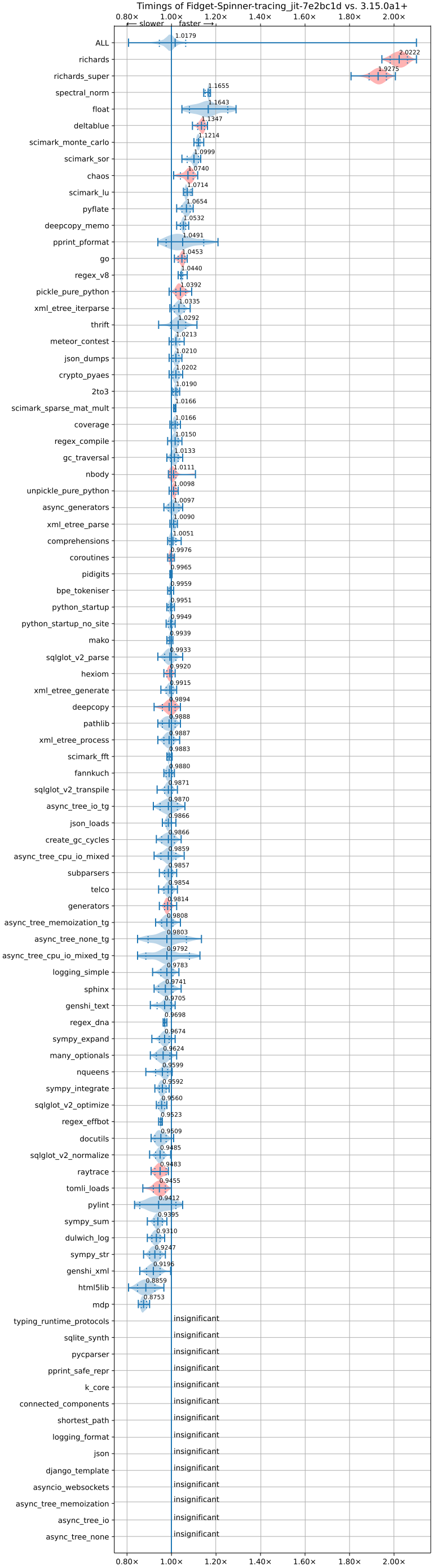
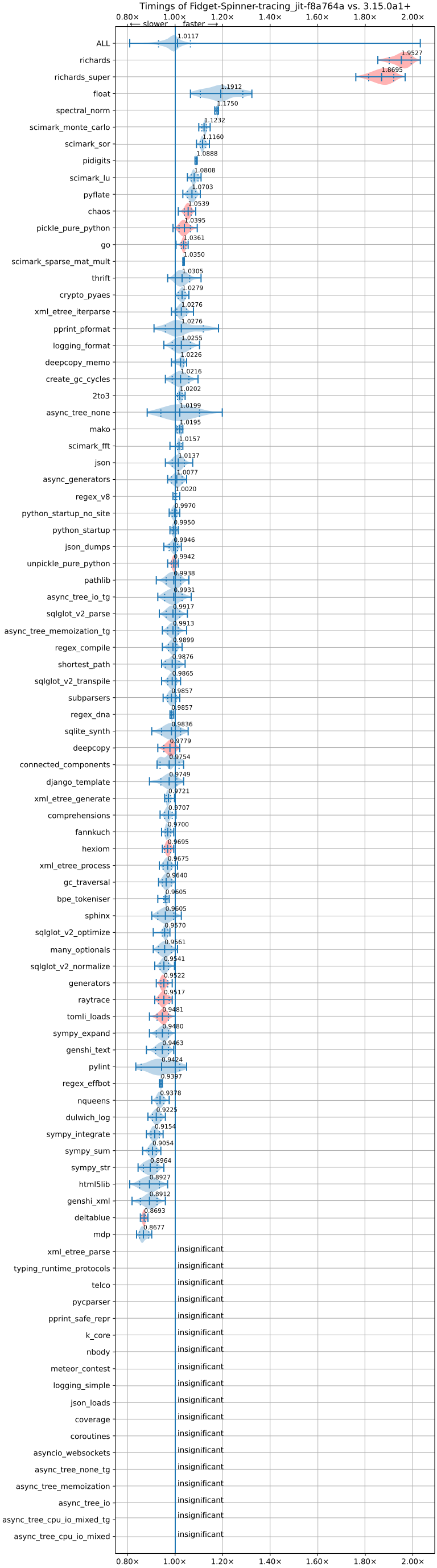
This PR changes the current JIT model from trace projection to trace recording. Benchmarking: better pyperformance (about 1.7% overall) geomean versus current https://raw.githubusercontent.com/facebookexperimental/free-threading-benchmarking/refs/heads/main/results/bm-20251108-3.15.0a1%2B-7e2bc1d-JIT/bm-20251108-vultr-x86_64-Fidget%252dSpinner-tracing_jit-3.15.0a1%2B-7e2bc1d-vs-base.svg, 100% faster Richards on the most improved benchmark versus the current JIT. Slowdown of about 10-15% on the worst benchmark versus the current JIT. **Note: the fastest version isn't the one merged, as it relies on fixing bugs in the specializing interpreter, which is left to another PR**. The speedup in the merged version is about 1.1%. https://raw.githubusercontent.com/facebookexperimental/free-threading-benchmarking/refs/heads/main/results/bm-20251112-3.15.0a1%2B-f8a764a-JIT/bm-20251112-vultr-x86_64-Fidget%252dSpinner-tracing_jit-3.15.0a1%2B-f8a764a-vs-base.svg

Stats: 50% more uops executed, 30% more traces entered the last time we ran them. It also suggests our trace lengths for a real trace recording JIT are too short, as a lot of trace too long aborts https://github.com/facebookexperimental/free-threading-benchmarking/blob/main/results/bm-20251023-3.15.0a1%2B-eb73378-CLANG%2CJIT/bm-20251023-vultr-x86_64-Fidget%252dSpinner-tracing_jit-3.15.0a1%2B-eb73378-pystats-vs-base.md .

This new JIT frontend is already able to record/execute significantly more instructions than the previous JIT frontend. In this PR, we are now able to record through custom dunders, simple object creation, generators, etc. None of these were done by the old JIT frontend. Some custom dunders uops were discovered to be broken as part of this work gh-140277

The optimizer stack space check is disabled, as it's no longer valid to deal with underflow.

Pros:
* Ignoring the generated tracer code as it's automatically created, this is only additional 1k lines of code. The maintenance burden is handled by the DSL and code generator.
* `optimizer.c` is now significantly simpler, as we don't have to do strange things to recover the bytecode from a trace.
* The new JIT frontend is able to handle a lot more control-flow than the old one.
* Tracing is very low overhead. We use the tail calling interpreter/computed goto interpreter to switch between tracing mode and non-tracing mode. I call this mechanism dual dispatch, as we have two dispatch tables dispatching to each other. Specialization is still enabled while tracing.
* Better handling of polymorphism. We leverage the specializing interpreter for this.

Cons:
* (For now) requires tail calling interpreter or computed gotos. This means no Windows JIT for now :(. Not to fret, tail calling is coming soon to Windows though https://github.com/python/cpython/pull/139962

Design:
* After each instruction, the `record_previous_inst` function/label is executed. This does as the name suggests.
* The tracing interpreter lowers bytecode to uops directly so that it can obtain "fresh" values at the point of lowering.
* The tracing version behaves nearly identical to the normal interpreter, in fact it even has specialization! This allows it to run without much of a slowdown when tracing. The actual cost of tracing is only a function call and writes to memory.
* The tracing interpreter uses the specializing interpreter's deopt to naturally form the side exit chains. This allows it to side exit chain effectively, without repeating much code. We force a re-specializing when tracing a deopt.
* The tracing interpreter can even handle goto errors/exceptions, but I chose to disable them for now as it's not tested.
* Because we do not share interpreter dispatch, there is should be no significant slowdown to the original specializing interpreter on tailcall and computed got with JIT disabled. With JIT enabled, there might be a slowdown in the form of the JIT trying to trace.
* Things that could have dynamic instruction pointer effects are guarded on. The guard deopts to a new instruction --- `_DYNAMIC_EXIT`.
1941 lines
67 KiB
C
1941 lines
67 KiB
C
#include "Python.h"
|
|
|
|
#ifdef _Py_TIER2
|
|
|
|
#include "opcode.h"
|
|
#include "pycore_interp.h"
|
|
#include "pycore_backoff.h"
|
|
#include "pycore_bitutils.h" // _Py_popcount32()
|
|
#include "pycore_ceval.h" // _Py_set_eval_breaker_bit
|
|
#include "pycore_code.h" // _Py_GetBaseCodeUnit
|
|
#include "pycore_function.h" // _PyFunction_LookupByVersion()
|
|
#include "pycore_interpframe.h"
|
|
#include "pycore_object.h" // _PyObject_GC_UNTRACK()
|
|
#include "pycore_opcode_metadata.h" // _PyOpcode_OpName[]
|
|
#include "pycore_opcode_utils.h" // MAX_REAL_OPCODE
|
|
#include "pycore_optimizer.h" // _Py_uop_analyze_and_optimize()
|
|
#include "pycore_pystate.h" // _PyInterpreterState_GET()
|
|
#include "pycore_tuple.h" // _PyTuple_FromArraySteal
|
|
#include "pycore_unicodeobject.h" // _PyUnicode_FromASCII
|
|
#include "pycore_uop_ids.h"
|
|
#include "pycore_jit.h"
|
|
#include <stdbool.h>
|
|
#include <stdint.h>
|
|
#include <stddef.h>
|
|
|
|
#define NEED_OPCODE_METADATA
|
|
#include "pycore_uop_metadata.h" // Uop tables
|
|
#undef NEED_OPCODE_METADATA
|
|
|
|
#define MAX_EXECUTORS_SIZE 256
|
|
|
|
// Trace too short, no progress:
|
|
// _START_EXECUTOR
|
|
// _MAKE_WARM
|
|
// _CHECK_VALIDITY
|
|
// _SET_IP
|
|
// is 4-5 instructions.
|
|
#define CODE_SIZE_NO_PROGRESS 5
|
|
// We start with _START_EXECUTOR, _MAKE_WARM
|
|
#define CODE_SIZE_EMPTY 2
|
|
|
|
#define _PyExecutorObject_CAST(op) ((_PyExecutorObject *)(op))
|
|
|
|
static bool
|
|
has_space_for_executor(PyCodeObject *code, _Py_CODEUNIT *instr)
|
|
{
|
|
if (code == (PyCodeObject *)&_Py_InitCleanup) {
|
|
return false;
|
|
}
|
|
if (instr->op.code == ENTER_EXECUTOR) {
|
|
return true;
|
|
}
|
|
if (code->co_executors == NULL) {
|
|
return true;
|
|
}
|
|
return code->co_executors->size < MAX_EXECUTORS_SIZE;
|
|
}
|
|
|
|
static int32_t
|
|
get_index_for_executor(PyCodeObject *code, _Py_CODEUNIT *instr)
|
|
{
|
|
if (instr->op.code == ENTER_EXECUTOR) {
|
|
return instr->op.arg;
|
|
}
|
|
_PyExecutorArray *old = code->co_executors;
|
|
int size = 0;
|
|
int capacity = 0;
|
|
if (old != NULL) {
|
|
size = old->size;
|
|
capacity = old->capacity;
|
|
assert(size < MAX_EXECUTORS_SIZE);
|
|
}
|
|
assert(size <= capacity);
|
|
if (size == capacity) {
|
|
/* Array is full. Grow array */
|
|
int new_capacity = capacity ? capacity * 2 : 4;
|
|
_PyExecutorArray *new = PyMem_Realloc(
|
|
old,
|
|
offsetof(_PyExecutorArray, executors) +
|
|
new_capacity * sizeof(_PyExecutorObject *));
|
|
if (new == NULL) {
|
|
return -1;
|
|
}
|
|
new->capacity = new_capacity;
|
|
new->size = size;
|
|
code->co_executors = new;
|
|
}
|
|
assert(size < code->co_executors->capacity);
|
|
return size;
|
|
}
|
|
|
|
static void
|
|
insert_executor(PyCodeObject *code, _Py_CODEUNIT *instr, int index, _PyExecutorObject *executor)
|
|
{
|
|
Py_INCREF(executor);
|
|
if (instr->op.code == ENTER_EXECUTOR) {
|
|
assert(index == instr->op.arg);
|
|
_Py_ExecutorDetach(code->co_executors->executors[index]);
|
|
}
|
|
else {
|
|
assert(code->co_executors->size == index);
|
|
assert(code->co_executors->capacity > index);
|
|
code->co_executors->size++;
|
|
}
|
|
executor->vm_data.opcode = instr->op.code;
|
|
executor->vm_data.oparg = instr->op.arg;
|
|
executor->vm_data.code = code;
|
|
executor->vm_data.index = (int)(instr - _PyCode_CODE(code));
|
|
code->co_executors->executors[index] = executor;
|
|
assert(index < MAX_EXECUTORS_SIZE);
|
|
instr->op.code = ENTER_EXECUTOR;
|
|
instr->op.arg = index;
|
|
}
|
|
|
|
static _PyExecutorObject *
|
|
make_executor_from_uops(_PyUOpInstruction *buffer, int length, const _PyBloomFilter *dependencies, int chain_depth);
|
|
|
|
static int
|
|
uop_optimize(_PyInterpreterFrame *frame, PyThreadState *tstate,
|
|
_PyExecutorObject **exec_ptr,
|
|
bool progress_needed);
|
|
|
|
/* Returns 1 if optimized, 0 if not optimized, and -1 for an error.
|
|
* If optimized, *executor_ptr contains a new reference to the executor
|
|
*/
|
|
// gh-137573: inlining this function causes stack overflows
|
|
Py_NO_INLINE int
|
|
_PyOptimizer_Optimize(
|
|
_PyInterpreterFrame *frame, PyThreadState *tstate)
|
|
{
|
|
_PyThreadStateImpl *_tstate = (_PyThreadStateImpl *)tstate;
|
|
int chain_depth = _tstate->jit_tracer_state.initial_state.chain_depth;
|
|
PyInterpreterState *interp = _PyInterpreterState_GET();
|
|
if (!interp->jit) {
|
|
// gh-140936: It is possible that interp->jit will become false during
|
|
// interpreter finalization. However, the specialized JUMP_BACKWARD_JIT
|
|
// instruction may still be present. In this case, we should
|
|
// return immediately without optimization.
|
|
return 0;
|
|
}
|
|
assert(!interp->compiling);
|
|
assert(_tstate->jit_tracer_state.initial_state.stack_depth >= 0);
|
|
#ifndef Py_GIL_DISABLED
|
|
assert(_tstate->jit_tracer_state.initial_state.func != NULL);
|
|
interp->compiling = true;
|
|
// The first executor in a chain and the MAX_CHAIN_DEPTH'th executor *must*
|
|
// make progress in order to avoid infinite loops or excessively-long
|
|
// side-exit chains. We can only insert the executor into the bytecode if
|
|
// this is true, since a deopt won't infinitely re-enter the executor:
|
|
chain_depth %= MAX_CHAIN_DEPTH;
|
|
bool progress_needed = chain_depth == 0;
|
|
PyCodeObject *code = (PyCodeObject *)_tstate->jit_tracer_state.initial_state.code;
|
|
_Py_CODEUNIT *start = _tstate->jit_tracer_state.initial_state.start_instr;
|
|
if (progress_needed && !has_space_for_executor(code, start)) {
|
|
interp->compiling = false;
|
|
return 0;
|
|
}
|
|
// One of our dependencies while tracing was invalidated. Not worth compiling.
|
|
if (!_tstate->jit_tracer_state.prev_state.dependencies_still_valid) {
|
|
interp->compiling = false;
|
|
return 0;
|
|
}
|
|
_PyExecutorObject *executor;
|
|
int err = uop_optimize(frame, tstate, &executor, progress_needed);
|
|
if (err <= 0) {
|
|
interp->compiling = false;
|
|
return err;
|
|
}
|
|
assert(executor != NULL);
|
|
if (progress_needed) {
|
|
int index = get_index_for_executor(code, start);
|
|
if (index < 0) {
|
|
/* Out of memory. Don't raise and assume that the
|
|
* error will show up elsewhere.
|
|
*
|
|
* If an optimizer has already produced an executor,
|
|
* it might get confused by the executor disappearing,
|
|
* but there is not much we can do about that here. */
|
|
Py_DECREF(executor);
|
|
interp->compiling = false;
|
|
return 0;
|
|
}
|
|
insert_executor(code, start, index, executor);
|
|
}
|
|
else {
|
|
executor->vm_data.code = NULL;
|
|
}
|
|
_PyExitData *exit = _tstate->jit_tracer_state.initial_state.exit;
|
|
if (exit != NULL) {
|
|
exit->executor = executor;
|
|
}
|
|
executor->vm_data.chain_depth = chain_depth;
|
|
assert(executor->vm_data.valid);
|
|
interp->compiling = false;
|
|
return 1;
|
|
#else
|
|
return 0;
|
|
#endif
|
|
}
|
|
|
|
static _PyExecutorObject *
|
|
get_executor_lock_held(PyCodeObject *code, int offset)
|
|
{
|
|
int code_len = (int)Py_SIZE(code);
|
|
for (int i = 0 ; i < code_len;) {
|
|
if (_PyCode_CODE(code)[i].op.code == ENTER_EXECUTOR && i*2 == offset) {
|
|
int oparg = _PyCode_CODE(code)[i].op.arg;
|
|
_PyExecutorObject *res = code->co_executors->executors[oparg];
|
|
Py_INCREF(res);
|
|
return res;
|
|
}
|
|
i += _PyInstruction_GetLength(code, i);
|
|
}
|
|
PyErr_SetString(PyExc_ValueError, "no executor at given byte offset");
|
|
return NULL;
|
|
}
|
|
|
|
_PyExecutorObject *
|
|
_Py_GetExecutor(PyCodeObject *code, int offset)
|
|
{
|
|
_PyExecutorObject *executor;
|
|
Py_BEGIN_CRITICAL_SECTION(code);
|
|
executor = get_executor_lock_held(code, offset);
|
|
Py_END_CRITICAL_SECTION();
|
|
return executor;
|
|
}
|
|
|
|
static PyObject *
|
|
is_valid(PyObject *self, PyObject *Py_UNUSED(ignored))
|
|
{
|
|
return PyBool_FromLong(((_PyExecutorObject *)self)->vm_data.valid);
|
|
}
|
|
|
|
static PyObject *
|
|
get_opcode(PyObject *self, PyObject *Py_UNUSED(ignored))
|
|
{
|
|
return PyLong_FromUnsignedLong(((_PyExecutorObject *)self)->vm_data.opcode);
|
|
}
|
|
|
|
static PyObject *
|
|
get_oparg(PyObject *self, PyObject *Py_UNUSED(ignored))
|
|
{
|
|
return PyLong_FromUnsignedLong(((_PyExecutorObject *)self)->vm_data.oparg);
|
|
}
|
|
|
|
///////////////////// Experimental UOp Optimizer /////////////////////
|
|
|
|
static int executor_clear(PyObject *executor);
|
|
static void unlink_executor(_PyExecutorObject *executor);
|
|
|
|
|
|
void
|
|
_PyExecutor_Free(_PyExecutorObject *self)
|
|
{
|
|
#ifdef _Py_JIT
|
|
_PyJIT_Free(self);
|
|
#endif
|
|
PyObject_GC_Del(self);
|
|
}
|
|
|
|
void
|
|
_Py_ClearExecutorDeletionList(PyInterpreterState *interp)
|
|
{
|
|
_PyRuntimeState *runtime = &_PyRuntime;
|
|
HEAD_LOCK(runtime);
|
|
PyThreadState* ts = PyInterpreterState_ThreadHead(interp);
|
|
HEAD_UNLOCK(runtime);
|
|
while (ts) {
|
|
_PyExecutorObject *current = (_PyExecutorObject *)ts->current_executor;
|
|
if (current != NULL) {
|
|
/* Anything in this list will be unlinked, so we can reuse the
|
|
* linked field as a reachability marker. */
|
|
current->vm_data.linked = 1;
|
|
}
|
|
HEAD_LOCK(runtime);
|
|
ts = PyThreadState_Next(ts);
|
|
HEAD_UNLOCK(runtime);
|
|
}
|
|
_PyExecutorObject **prev_to_next_ptr = &interp->executor_deletion_list_head;
|
|
_PyExecutorObject *exec = *prev_to_next_ptr;
|
|
while (exec != NULL) {
|
|
if (exec->vm_data.linked) {
|
|
// This executor is currently executing
|
|
exec->vm_data.linked = 0;
|
|
prev_to_next_ptr = &exec->vm_data.links.next;
|
|
}
|
|
else {
|
|
*prev_to_next_ptr = exec->vm_data.links.next;
|
|
_PyExecutor_Free(exec);
|
|
}
|
|
exec = *prev_to_next_ptr;
|
|
}
|
|
interp->executor_deletion_list_remaining_capacity = EXECUTOR_DELETE_LIST_MAX;
|
|
}
|
|
|
|
static void
|
|
add_to_pending_deletion_list(_PyExecutorObject *self)
|
|
{
|
|
PyInterpreterState *interp = PyInterpreterState_Get();
|
|
self->vm_data.links.next = interp->executor_deletion_list_head;
|
|
interp->executor_deletion_list_head = self;
|
|
if (interp->executor_deletion_list_remaining_capacity > 0) {
|
|
interp->executor_deletion_list_remaining_capacity--;
|
|
}
|
|
else {
|
|
_Py_ClearExecutorDeletionList(interp);
|
|
}
|
|
}
|
|
|
|
static void
|
|
uop_dealloc(PyObject *op) {
|
|
_PyExecutorObject *self = _PyExecutorObject_CAST(op);
|
|
_PyObject_GC_UNTRACK(self);
|
|
assert(self->vm_data.code == NULL);
|
|
unlink_executor(self);
|
|
// Once unlinked it becomes impossible to invalidate an executor, so do it here.
|
|
self->vm_data.valid = 0;
|
|
add_to_pending_deletion_list(self);
|
|
}
|
|
|
|
const char *
|
|
_PyUOpName(int index)
|
|
{
|
|
if (index < 0 || index > MAX_UOP_ID) {
|
|
return NULL;
|
|
}
|
|
return _PyOpcode_uop_name[index];
|
|
}
|
|
|
|
#ifdef Py_DEBUG
|
|
void
|
|
_PyUOpPrint(const _PyUOpInstruction *uop)
|
|
{
|
|
const char *name = _PyUOpName(uop->opcode);
|
|
if (name == NULL) {
|
|
printf("<uop %d>", uop->opcode);
|
|
}
|
|
else {
|
|
printf("%s", name);
|
|
}
|
|
switch(uop->format) {
|
|
case UOP_FORMAT_TARGET:
|
|
printf(" (%d, target=%d, operand0=%#" PRIx64 ", operand1=%#" PRIx64,
|
|
uop->oparg,
|
|
uop->target,
|
|
(uint64_t)uop->operand0,
|
|
(uint64_t)uop->operand1);
|
|
break;
|
|
case UOP_FORMAT_JUMP:
|
|
printf(" (%d, jump_target=%d, operand0=%#" PRIx64 ", operand1=%#" PRIx64,
|
|
uop->oparg,
|
|
uop->jump_target,
|
|
(uint64_t)uop->operand0,
|
|
(uint64_t)uop->operand1);
|
|
break;
|
|
default:
|
|
printf(" (%d, Unknown format)", uop->oparg);
|
|
}
|
|
if (_PyUop_Flags[uop->opcode] & HAS_ERROR_FLAG) {
|
|
printf(", error_target=%d", uop->error_target);
|
|
}
|
|
|
|
printf(")");
|
|
}
|
|
#endif
|
|
|
|
static Py_ssize_t
|
|
uop_len(PyObject *op)
|
|
{
|
|
_PyExecutorObject *self = _PyExecutorObject_CAST(op);
|
|
return self->code_size;
|
|
}
|
|
|
|
static PyObject *
|
|
uop_item(PyObject *op, Py_ssize_t index)
|
|
{
|
|
_PyExecutorObject *self = _PyExecutorObject_CAST(op);
|
|
Py_ssize_t len = uop_len(op);
|
|
if (index < 0 || index >= len) {
|
|
PyErr_SetNone(PyExc_IndexError);
|
|
return NULL;
|
|
}
|
|
const char *name = _PyUOpName(self->trace[index].opcode);
|
|
if (name == NULL) {
|
|
name = "<nil>";
|
|
}
|
|
PyObject *oname = _PyUnicode_FromASCII(name, strlen(name));
|
|
if (oname == NULL) {
|
|
return NULL;
|
|
}
|
|
PyObject *oparg = PyLong_FromUnsignedLong(self->trace[index].oparg);
|
|
if (oparg == NULL) {
|
|
Py_DECREF(oname);
|
|
return NULL;
|
|
}
|
|
PyObject *target = PyLong_FromUnsignedLong(self->trace[index].target);
|
|
if (target == NULL) {
|
|
Py_DECREF(oparg);
|
|
Py_DECREF(oname);
|
|
return NULL;
|
|
}
|
|
PyObject *operand = PyLong_FromUnsignedLongLong(self->trace[index].operand0);
|
|
if (operand == NULL) {
|
|
Py_DECREF(target);
|
|
Py_DECREF(oparg);
|
|
Py_DECREF(oname);
|
|
return NULL;
|
|
}
|
|
PyObject *args[4] = { oname, oparg, target, operand };
|
|
return _PyTuple_FromArraySteal(args, 4);
|
|
}
|
|
|
|
PySequenceMethods uop_as_sequence = {
|
|
.sq_length = uop_len,
|
|
.sq_item = uop_item,
|
|
};
|
|
|
|
static int
|
|
executor_traverse(PyObject *o, visitproc visit, void *arg)
|
|
{
|
|
_PyExecutorObject *executor = _PyExecutorObject_CAST(o);
|
|
for (uint32_t i = 0; i < executor->exit_count; i++) {
|
|
Py_VISIT(executor->exits[i].executor);
|
|
}
|
|
return 0;
|
|
}
|
|
|
|
static PyObject *
|
|
get_jit_code(PyObject *self, PyObject *Py_UNUSED(ignored))
|
|
{
|
|
#ifndef _Py_JIT
|
|
PyErr_SetString(PyExc_RuntimeError, "JIT support not enabled.");
|
|
return NULL;
|
|
#else
|
|
_PyExecutorObject *executor = _PyExecutorObject_CAST(self);
|
|
if (executor->jit_code == NULL || executor->jit_size == 0) {
|
|
Py_RETURN_NONE;
|
|
}
|
|
return PyBytes_FromStringAndSize(executor->jit_code, executor->jit_size);
|
|
#endif
|
|
}
|
|
|
|
static PyMethodDef uop_executor_methods[] = {
|
|
{ "is_valid", is_valid, METH_NOARGS, NULL },
|
|
{ "get_jit_code", get_jit_code, METH_NOARGS, NULL},
|
|
{ "get_opcode", get_opcode, METH_NOARGS, NULL },
|
|
{ "get_oparg", get_oparg, METH_NOARGS, NULL },
|
|
{ NULL, NULL },
|
|
};
|
|
|
|
static int
|
|
executor_is_gc(PyObject *o)
|
|
{
|
|
return !_Py_IsImmortal(o);
|
|
}
|
|
|
|
PyTypeObject _PyUOpExecutor_Type = {
|
|
PyVarObject_HEAD_INIT(&PyType_Type, 0)
|
|
.tp_name = "uop_executor",
|
|
.tp_basicsize = offsetof(_PyExecutorObject, exits),
|
|
.tp_itemsize = 1,
|
|
.tp_flags = Py_TPFLAGS_DEFAULT | Py_TPFLAGS_DISALLOW_INSTANTIATION | Py_TPFLAGS_HAVE_GC,
|
|
.tp_dealloc = uop_dealloc,
|
|
.tp_as_sequence = &uop_as_sequence,
|
|
.tp_methods = uop_executor_methods,
|
|
.tp_traverse = executor_traverse,
|
|
.tp_clear = executor_clear,
|
|
.tp_is_gc = executor_is_gc,
|
|
};
|
|
|
|
/* TO DO -- Generate these tables */
|
|
static const uint16_t
|
|
_PyUOp_Replacements[MAX_UOP_ID + 1] = {
|
|
[_ITER_JUMP_RANGE] = _GUARD_NOT_EXHAUSTED_RANGE,
|
|
[_ITER_JUMP_LIST] = _GUARD_NOT_EXHAUSTED_LIST,
|
|
[_ITER_JUMP_TUPLE] = _GUARD_NOT_EXHAUSTED_TUPLE,
|
|
[_FOR_ITER] = _FOR_ITER_TIER_TWO,
|
|
[_ITER_NEXT_LIST] = _ITER_NEXT_LIST_TIER_TWO,
|
|
[_CHECK_PERIODIC_AT_END] = _TIER2_RESUME_CHECK,
|
|
};
|
|
|
|
static const uint8_t
|
|
is_for_iter_test[MAX_UOP_ID + 1] = {
|
|
[_GUARD_NOT_EXHAUSTED_RANGE] = 1,
|
|
[_GUARD_NOT_EXHAUSTED_LIST] = 1,
|
|
[_GUARD_NOT_EXHAUSTED_TUPLE] = 1,
|
|
[_FOR_ITER_TIER_TWO] = 1,
|
|
};
|
|
|
|
static const uint16_t
|
|
BRANCH_TO_GUARD[4][2] = {
|
|
[POP_JUMP_IF_FALSE - POP_JUMP_IF_FALSE][0] = _GUARD_IS_TRUE_POP,
|
|
[POP_JUMP_IF_FALSE - POP_JUMP_IF_FALSE][1] = _GUARD_IS_FALSE_POP,
|
|
[POP_JUMP_IF_TRUE - POP_JUMP_IF_FALSE][0] = _GUARD_IS_FALSE_POP,
|
|
[POP_JUMP_IF_TRUE - POP_JUMP_IF_FALSE][1] = _GUARD_IS_TRUE_POP,
|
|
[POP_JUMP_IF_NONE - POP_JUMP_IF_FALSE][0] = _GUARD_IS_NOT_NONE_POP,
|
|
[POP_JUMP_IF_NONE - POP_JUMP_IF_FALSE][1] = _GUARD_IS_NONE_POP,
|
|
[POP_JUMP_IF_NOT_NONE - POP_JUMP_IF_FALSE][0] = _GUARD_IS_NONE_POP,
|
|
[POP_JUMP_IF_NOT_NONE - POP_JUMP_IF_FALSE][1] = _GUARD_IS_NOT_NONE_POP,
|
|
};
|
|
|
|
static const uint16_t
|
|
guard_ip_uop[MAX_UOP_ID + 1] = {
|
|
[_PUSH_FRAME] = _GUARD_IP__PUSH_FRAME,
|
|
[_RETURN_GENERATOR] = _GUARD_IP_RETURN_GENERATOR,
|
|
[_RETURN_VALUE] = _GUARD_IP_RETURN_VALUE,
|
|
[_YIELD_VALUE] = _GUARD_IP_YIELD_VALUE,
|
|
};
|
|
|
|
|
|
#define CONFIDENCE_RANGE 1000
|
|
#define CONFIDENCE_CUTOFF 333
|
|
|
|
#ifdef Py_DEBUG
|
|
#define DPRINTF(level, ...) \
|
|
if (lltrace >= (level)) { printf(__VA_ARGS__); }
|
|
#else
|
|
#define DPRINTF(level, ...)
|
|
#endif
|
|
|
|
|
|
static inline int
|
|
add_to_trace(
|
|
_PyUOpInstruction *trace,
|
|
int trace_length,
|
|
uint16_t opcode,
|
|
uint16_t oparg,
|
|
uint64_t operand,
|
|
uint32_t target)
|
|
{
|
|
trace[trace_length].opcode = opcode;
|
|
trace[trace_length].format = UOP_FORMAT_TARGET;
|
|
trace[trace_length].target = target;
|
|
trace[trace_length].oparg = oparg;
|
|
trace[trace_length].operand0 = operand;
|
|
#ifdef Py_STATS
|
|
trace[trace_length].execution_count = 0;
|
|
#endif
|
|
return trace_length + 1;
|
|
}
|
|
|
|
#ifdef Py_DEBUG
|
|
#define ADD_TO_TRACE(OPCODE, OPARG, OPERAND, TARGET) \
|
|
assert(trace_length < max_length); \
|
|
trace_length = add_to_trace(trace, trace_length, (OPCODE), (OPARG), (OPERAND), (TARGET)); \
|
|
if (lltrace >= 2) { \
|
|
printf("%4d ADD_TO_TRACE: ", trace_length); \
|
|
_PyUOpPrint(&trace[trace_length-1]); \
|
|
printf("\n"); \
|
|
}
|
|
#else
|
|
#define ADD_TO_TRACE(OPCODE, OPARG, OPERAND, TARGET) \
|
|
assert(trace_length < max_length); \
|
|
trace_length = add_to_trace(trace, trace_length, (OPCODE), (OPARG), (OPERAND), (TARGET));
|
|
#endif
|
|
|
|
#define INSTR_IP(INSTR, CODE) \
|
|
((uint32_t)((INSTR) - ((_Py_CODEUNIT *)(CODE)->co_code_adaptive)))
|
|
|
|
// Reserve space for n uops
|
|
#define RESERVE_RAW(n, opname) \
|
|
if (trace_length + (n) > max_length) { \
|
|
DPRINTF(2, "No room for %s (need %d, got %d)\n", \
|
|
(opname), (n), max_length - trace_length); \
|
|
OPT_STAT_INC(trace_too_long); \
|
|
goto full; \
|
|
}
|
|
|
|
|
|
/* Returns 1 on success (added to trace), 0 on trace end.
|
|
*/
|
|
int
|
|
_PyJit_translate_single_bytecode_to_trace(
|
|
PyThreadState *tstate,
|
|
_PyInterpreterFrame *frame,
|
|
_Py_CODEUNIT *next_instr,
|
|
bool stop_tracing)
|
|
{
|
|
|
|
#ifdef Py_DEBUG
|
|
char *python_lltrace = Py_GETENV("PYTHON_LLTRACE");
|
|
int lltrace = 0;
|
|
if (python_lltrace != NULL && *python_lltrace >= '0') {
|
|
lltrace = *python_lltrace - '0'; // TODO: Parse an int and all that
|
|
}
|
|
#endif
|
|
_PyThreadStateImpl *_tstate = (_PyThreadStateImpl *)tstate;
|
|
PyCodeObject *old_code = _tstate->jit_tracer_state.prev_state.instr_code;
|
|
bool progress_needed = (_tstate->jit_tracer_state.initial_state.chain_depth % MAX_CHAIN_DEPTH) == 0;
|
|
_PyBloomFilter *dependencies = &_tstate->jit_tracer_state.prev_state.dependencies;
|
|
int trace_length = _tstate->jit_tracer_state.prev_state.code_curr_size;
|
|
_PyUOpInstruction *trace = _tstate->jit_tracer_state.code_buffer;
|
|
int max_length = _tstate->jit_tracer_state.prev_state.code_max_size;
|
|
|
|
_Py_CODEUNIT *this_instr = _tstate->jit_tracer_state.prev_state.instr;
|
|
_Py_CODEUNIT *target_instr = this_instr;
|
|
uint32_t target = 0;
|
|
|
|
target = Py_IsNone((PyObject *)old_code)
|
|
? (int)(target_instr - _Py_INTERPRETER_TRAMPOLINE_INSTRUCTIONS_PTR)
|
|
: INSTR_IP(target_instr, old_code);
|
|
|
|
// Rewind EXTENDED_ARG so that we see the whole thing.
|
|
// We must point to the first EXTENDED_ARG when deopting.
|
|
int oparg = _tstate->jit_tracer_state.prev_state.instr_oparg;
|
|
int opcode = this_instr->op.code;
|
|
int rewind_oparg = oparg;
|
|
while (rewind_oparg > 255) {
|
|
rewind_oparg >>= 8;
|
|
target--;
|
|
}
|
|
|
|
int old_stack_level = _tstate->jit_tracer_state.prev_state.instr_stacklevel;
|
|
|
|
// Strange control-flow
|
|
bool has_dynamic_jump_taken = OPCODE_HAS_UNPREDICTABLE_JUMP(opcode) &&
|
|
(next_instr != this_instr + 1 + _PyOpcode_Caches[_PyOpcode_Deopt[opcode]]);
|
|
|
|
/* Special case the first instruction,
|
|
* so that we can guarantee forward progress */
|
|
if (progress_needed && _tstate->jit_tracer_state.prev_state.code_curr_size < CODE_SIZE_NO_PROGRESS) {
|
|
if (OPCODE_HAS_EXIT(opcode) || OPCODE_HAS_DEOPT(opcode)) {
|
|
opcode = _PyOpcode_Deopt[opcode];
|
|
}
|
|
assert(!OPCODE_HAS_EXIT(opcode));
|
|
assert(!OPCODE_HAS_DEOPT(opcode));
|
|
}
|
|
|
|
bool needs_guard_ip = OPCODE_HAS_NEEDS_GUARD_IP(opcode);
|
|
if (has_dynamic_jump_taken && !needs_guard_ip) {
|
|
DPRINTF(2, "Unsupported: dynamic jump taken %s\n", _PyOpcode_OpName[opcode]);
|
|
goto unsupported;
|
|
}
|
|
|
|
int is_sys_tracing = (tstate->c_tracefunc != NULL) || (tstate->c_profilefunc != NULL);
|
|
if (is_sys_tracing) {
|
|
goto full;
|
|
}
|
|
|
|
if (stop_tracing) {
|
|
ADD_TO_TRACE(_DEOPT, 0, 0, target);
|
|
goto done;
|
|
}
|
|
|
|
DPRINTF(2, "%p %d: %s(%d) %d %d\n", old_code, target, _PyOpcode_OpName[opcode], oparg, needs_guard_ip, old_stack_level);
|
|
|
|
#ifdef Py_DEBUG
|
|
if (oparg > 255) {
|
|
assert(_Py_GetBaseCodeUnit(old_code, target).op.code == EXTENDED_ARG);
|
|
}
|
|
#endif
|
|
|
|
// Skip over super instructions.
|
|
if (_tstate->jit_tracer_state.prev_state.instr_is_super) {
|
|
_tstate->jit_tracer_state.prev_state.instr_is_super = false;
|
|
return 1;
|
|
}
|
|
|
|
if (opcode == ENTER_EXECUTOR) {
|
|
goto full;
|
|
}
|
|
|
|
if (!_tstate->jit_tracer_state.prev_state.dependencies_still_valid) {
|
|
goto done;
|
|
}
|
|
|
|
// This happens when a recursive call happens that we can't trace. Such as Python -> C -> Python calls
|
|
// If we haven't guarded the IP, then it's untraceable.
|
|
if (frame != _tstate->jit_tracer_state.prev_state.instr_frame && !needs_guard_ip) {
|
|
DPRINTF(2, "Unsupported: unguardable jump taken\n");
|
|
goto unsupported;
|
|
}
|
|
|
|
if (oparg > 0xFFFF) {
|
|
DPRINTF(2, "Unsupported: oparg too large\n");
|
|
goto unsupported;
|
|
}
|
|
|
|
// TODO (gh-140277): The constituent use one extra stack slot. So we need to check for headroom.
|
|
if (opcode == BINARY_OP_SUBSCR_GETITEM && old_stack_level + 1 > old_code->co_stacksize) {
|
|
unsupported:
|
|
{
|
|
// Rewind to previous instruction and replace with _EXIT_TRACE.
|
|
_PyUOpInstruction *curr = &trace[trace_length-1];
|
|
while (curr->opcode != _SET_IP && trace_length > 2) {
|
|
trace_length--;
|
|
curr = &trace[trace_length-1];
|
|
}
|
|
assert(curr->opcode == _SET_IP || trace_length == 2);
|
|
if (curr->opcode == _SET_IP) {
|
|
int32_t old_target = (int32_t)uop_get_target(curr);
|
|
curr++;
|
|
trace_length++;
|
|
curr->opcode = _EXIT_TRACE;
|
|
curr->format = UOP_FORMAT_TARGET;
|
|
curr->target = old_target;
|
|
}
|
|
goto done;
|
|
}
|
|
}
|
|
|
|
if (opcode == NOP) {
|
|
return 1;
|
|
}
|
|
|
|
if (opcode == JUMP_FORWARD) {
|
|
return 1;
|
|
}
|
|
|
|
if (opcode == EXTENDED_ARG) {
|
|
return 1;
|
|
}
|
|
|
|
// One for possible _DEOPT, one because _CHECK_VALIDITY itself might _DEOPT
|
|
max_length -= 2;
|
|
|
|
const struct opcode_macro_expansion *expansion = &_PyOpcode_macro_expansion[opcode];
|
|
|
|
assert(opcode != ENTER_EXECUTOR && opcode != EXTENDED_ARG);
|
|
assert(!_PyErr_Occurred(tstate));
|
|
|
|
|
|
if (OPCODE_HAS_EXIT(opcode)) {
|
|
// Make space for side exit and final _EXIT_TRACE:
|
|
max_length--;
|
|
}
|
|
if (OPCODE_HAS_ERROR(opcode)) {
|
|
// Make space for error stub and final _EXIT_TRACE:
|
|
max_length--;
|
|
}
|
|
|
|
// _GUARD_IP leads to an exit.
|
|
max_length -= needs_guard_ip;
|
|
|
|
RESERVE_RAW(expansion->nuops + needs_guard_ip + 2 + (!OPCODE_HAS_NO_SAVE_IP(opcode)), "uop and various checks");
|
|
|
|
ADD_TO_TRACE(_CHECK_VALIDITY, 0, 0, target);
|
|
|
|
if (!OPCODE_HAS_NO_SAVE_IP(opcode)) {
|
|
ADD_TO_TRACE(_SET_IP, 0, (uintptr_t)target_instr, target);
|
|
}
|
|
|
|
// Can be NULL for the entry frame.
|
|
if (old_code != NULL) {
|
|
_Py_BloomFilter_Add(dependencies, old_code);
|
|
}
|
|
|
|
switch (opcode) {
|
|
case POP_JUMP_IF_NONE:
|
|
case POP_JUMP_IF_NOT_NONE:
|
|
case POP_JUMP_IF_FALSE:
|
|
case POP_JUMP_IF_TRUE:
|
|
{
|
|
_Py_CODEUNIT *computed_next_instr_without_modifiers = target_instr + 1 + _PyOpcode_Caches[_PyOpcode_Deopt[opcode]];
|
|
_Py_CODEUNIT *computed_next_instr = computed_next_instr_without_modifiers + (computed_next_instr_without_modifiers->op.code == NOT_TAKEN);
|
|
_Py_CODEUNIT *computed_jump_instr = computed_next_instr_without_modifiers + oparg;
|
|
assert(next_instr == computed_next_instr || next_instr == computed_jump_instr);
|
|
int jump_happened = computed_jump_instr == next_instr;
|
|
assert(jump_happened == (target_instr[1].cache & 1));
|
|
uint32_t uopcode = BRANCH_TO_GUARD[opcode - POP_JUMP_IF_FALSE][jump_happened];
|
|
ADD_TO_TRACE(uopcode, 0, 0, INSTR_IP(jump_happened ? computed_next_instr : computed_jump_instr, old_code));
|
|
break;
|
|
}
|
|
case JUMP_BACKWARD_JIT:
|
|
// This is possible as the JIT might have re-activated after it was disabled
|
|
case JUMP_BACKWARD_NO_JIT:
|
|
case JUMP_BACKWARD:
|
|
ADD_TO_TRACE(_CHECK_PERIODIC, 0, 0, target);
|
|
_Py_FALLTHROUGH;
|
|
case JUMP_BACKWARD_NO_INTERRUPT:
|
|
{
|
|
if ((next_instr != _tstate->jit_tracer_state.initial_state.close_loop_instr) &&
|
|
(next_instr != _tstate->jit_tracer_state.initial_state.start_instr) &&
|
|
_tstate->jit_tracer_state.prev_state.code_curr_size > CODE_SIZE_NO_PROGRESS &&
|
|
// For side exits, we don't want to terminate them early.
|
|
_tstate->jit_tracer_state.initial_state.exit == NULL &&
|
|
// These are coroutines, and we want to unroll those usually.
|
|
opcode != JUMP_BACKWARD_NO_INTERRUPT) {
|
|
// We encountered a JUMP_BACKWARD but not to the top of our own loop.
|
|
// We don't want to continue tracing as we might get stuck in the
|
|
// inner loop. Instead, end the trace where the executor of the
|
|
// inner loop might start and let the traces rejoin.
|
|
OPT_STAT_INC(inner_loop);
|
|
ADD_TO_TRACE(_EXIT_TRACE, 0, 0, target);
|
|
trace[trace_length-1].operand1 = true; // is_control_flow
|
|
DPRINTF(2, "JUMP_BACKWARD not to top ends trace %p %p %p\n", next_instr,
|
|
_tstate->jit_tracer_state.initial_state.close_loop_instr, _tstate->jit_tracer_state.initial_state.start_instr);
|
|
goto done;
|
|
}
|
|
break;
|
|
}
|
|
|
|
case RESUME:
|
|
case RESUME_CHECK:
|
|
/* Use a special tier 2 version of RESUME_CHECK to allow traces to
|
|
* start with RESUME_CHECK */
|
|
ADD_TO_TRACE(_TIER2_RESUME_CHECK, 0, 0, target);
|
|
break;
|
|
default:
|
|
{
|
|
const struct opcode_macro_expansion *expansion = &_PyOpcode_macro_expansion[opcode];
|
|
// Reserve space for nuops (+ _SET_IP + _EXIT_TRACE)
|
|
int nuops = expansion->nuops;
|
|
if (nuops == 0) {
|
|
DPRINTF(2, "Unsupported opcode %s\n", _PyOpcode_OpName[opcode]);
|
|
goto unsupported;
|
|
}
|
|
assert(nuops > 0);
|
|
uint32_t orig_oparg = oparg; // For OPARG_TOP/BOTTOM
|
|
uint32_t orig_target = target;
|
|
for (int i = 0; i < nuops; i++) {
|
|
oparg = orig_oparg;
|
|
target = orig_target;
|
|
uint32_t uop = expansion->uops[i].uop;
|
|
uint64_t operand = 0;
|
|
// Add one to account for the actual opcode/oparg pair:
|
|
int offset = expansion->uops[i].offset + 1;
|
|
switch (expansion->uops[i].size) {
|
|
case OPARG_SIMPLE:
|
|
assert(opcode != _JUMP_BACKWARD_NO_INTERRUPT && opcode != JUMP_BACKWARD);
|
|
break;
|
|
case OPARG_CACHE_1:
|
|
operand = read_u16(&this_instr[offset].cache);
|
|
break;
|
|
case OPARG_CACHE_2:
|
|
operand = read_u32(&this_instr[offset].cache);
|
|
break;
|
|
case OPARG_CACHE_4:
|
|
operand = read_u64(&this_instr[offset].cache);
|
|
break;
|
|
case OPARG_TOP: // First half of super-instr
|
|
assert(orig_oparg <= 255);
|
|
oparg = orig_oparg >> 4;
|
|
break;
|
|
case OPARG_BOTTOM: // Second half of super-instr
|
|
assert(orig_oparg <= 255);
|
|
oparg = orig_oparg & 0xF;
|
|
break;
|
|
case OPARG_SAVE_RETURN_OFFSET: // op=_SAVE_RETURN_OFFSET; oparg=return_offset
|
|
oparg = offset;
|
|
assert(uop == _SAVE_RETURN_OFFSET);
|
|
break;
|
|
case OPARG_REPLACED:
|
|
uop = _PyUOp_Replacements[uop];
|
|
assert(uop != 0);
|
|
|
|
uint32_t next_inst = target + 1 + _PyOpcode_Caches[_PyOpcode_Deopt[opcode]];
|
|
if (uop == _TIER2_RESUME_CHECK) {
|
|
target = next_inst;
|
|
}
|
|
else {
|
|
int extended_arg = orig_oparg > 255;
|
|
uint32_t jump_target = next_inst + orig_oparg + extended_arg;
|
|
assert(_Py_GetBaseCodeUnit(old_code, jump_target).op.code == END_FOR);
|
|
assert(_Py_GetBaseCodeUnit(old_code, jump_target+1).op.code == POP_ITER);
|
|
if (is_for_iter_test[uop]) {
|
|
target = jump_target + 1;
|
|
}
|
|
}
|
|
break;
|
|
case OPERAND1_1:
|
|
assert(trace[trace_length-1].opcode == uop);
|
|
operand = read_u16(&this_instr[offset].cache);
|
|
trace[trace_length-1].operand1 = operand;
|
|
continue;
|
|
case OPERAND1_2:
|
|
assert(trace[trace_length-1].opcode == uop);
|
|
operand = read_u32(&this_instr[offset].cache);
|
|
trace[trace_length-1].operand1 = operand;
|
|
continue;
|
|
case OPERAND1_4:
|
|
assert(trace[trace_length-1].opcode == uop);
|
|
operand = read_u64(&this_instr[offset].cache);
|
|
trace[trace_length-1].operand1 = operand;
|
|
continue;
|
|
default:
|
|
fprintf(stderr,
|
|
"opcode=%d, oparg=%d; nuops=%d, i=%d; size=%d, offset=%d\n",
|
|
opcode, oparg, nuops, i,
|
|
expansion->uops[i].size,
|
|
expansion->uops[i].offset);
|
|
Py_FatalError("garbled expansion");
|
|
}
|
|
if (uop == _PUSH_FRAME || uop == _RETURN_VALUE || uop == _RETURN_GENERATOR || uop == _YIELD_VALUE) {
|
|
PyCodeObject *new_code = (PyCodeObject *)PyStackRef_AsPyObjectBorrow(frame->f_executable);
|
|
PyFunctionObject *new_func = (PyFunctionObject *)PyStackRef_AsPyObjectBorrow(frame->f_funcobj);
|
|
|
|
operand = 0;
|
|
if (frame->owner < FRAME_OWNED_BY_INTERPRETER) {
|
|
// Don't add nested code objects to the dependency.
|
|
// It causes endless re-traces.
|
|
if (new_func != NULL && !Py_IsNone((PyObject*)new_func) && !(new_code->co_flags & CO_NESTED)) {
|
|
operand = (uintptr_t)new_func;
|
|
DPRINTF(2, "Adding %p func to op\n", (void *)operand);
|
|
_Py_BloomFilter_Add(dependencies, new_func);
|
|
}
|
|
else if (new_code != NULL && !Py_IsNone((PyObject*)new_code)) {
|
|
operand = (uintptr_t)new_code | 1;
|
|
DPRINTF(2, "Adding %p code to op\n", (void *)operand);
|
|
_Py_BloomFilter_Add(dependencies, new_code);
|
|
}
|
|
}
|
|
ADD_TO_TRACE(uop, oparg, operand, target);
|
|
trace[trace_length - 1].operand1 = PyStackRef_IsNone(frame->f_executable) ? 2 : ((int)(frame->stackpointer - _PyFrame_Stackbase(frame)));
|
|
break;
|
|
}
|
|
if (uop == _BINARY_OP_INPLACE_ADD_UNICODE) {
|
|
assert(i + 1 == nuops);
|
|
_Py_CODEUNIT *next = target_instr + 1 + _PyOpcode_Caches[_PyOpcode_Deopt[opcode]];
|
|
assert(next->op.code == STORE_FAST);
|
|
operand = next->op.arg;
|
|
}
|
|
// All other instructions
|
|
ADD_TO_TRACE(uop, oparg, operand, target);
|
|
}
|
|
break;
|
|
} // End default
|
|
|
|
} // End switch (opcode)
|
|
|
|
if (needs_guard_ip) {
|
|
uint16_t guard_ip = guard_ip_uop[trace[trace_length-1].opcode];
|
|
if (guard_ip == 0) {
|
|
DPRINTF(1, "Unknown uop needing guard ip %s\n", _PyOpcode_uop_name[trace[trace_length-1].opcode]);
|
|
Py_UNREACHABLE();
|
|
}
|
|
ADD_TO_TRACE(guard_ip, 0, (uintptr_t)next_instr, 0);
|
|
}
|
|
// Loop back to the start
|
|
int is_first_instr = _tstate->jit_tracer_state.initial_state.close_loop_instr == next_instr ||
|
|
_tstate->jit_tracer_state.initial_state.start_instr == next_instr;
|
|
if (is_first_instr && _tstate->jit_tracer_state.prev_state.code_curr_size > CODE_SIZE_NO_PROGRESS) {
|
|
if (needs_guard_ip) {
|
|
ADD_TO_TRACE(_SET_IP, 0, (uintptr_t)next_instr, 0);
|
|
}
|
|
ADD_TO_TRACE(_JUMP_TO_TOP, 0, 0, 0);
|
|
goto done;
|
|
}
|
|
DPRINTF(2, "Trace continuing\n");
|
|
_tstate->jit_tracer_state.prev_state.code_curr_size = trace_length;
|
|
_tstate->jit_tracer_state.prev_state.code_max_size = max_length;
|
|
return 1;
|
|
done:
|
|
DPRINTF(2, "Trace done\n");
|
|
_tstate->jit_tracer_state.prev_state.code_curr_size = trace_length;
|
|
_tstate->jit_tracer_state.prev_state.code_max_size = max_length;
|
|
return 0;
|
|
full:
|
|
DPRINTF(2, "Trace full\n");
|
|
if (!is_terminator(&_tstate->jit_tracer_state.code_buffer[trace_length-1])) {
|
|
// Undo the last few instructions.
|
|
trace_length = _tstate->jit_tracer_state.prev_state.code_curr_size;
|
|
max_length = _tstate->jit_tracer_state.prev_state.code_max_size;
|
|
// We previously reversed one.
|
|
max_length += 1;
|
|
ADD_TO_TRACE(_EXIT_TRACE, 0, 0, target);
|
|
trace[trace_length-1].operand1 = true; // is_control_flow
|
|
}
|
|
_tstate->jit_tracer_state.prev_state.code_curr_size = trace_length;
|
|
_tstate->jit_tracer_state.prev_state.code_max_size = max_length;
|
|
return 0;
|
|
}
|
|
|
|
// Returns 0 for do not enter tracing, 1 on enter tracing.
|
|
int
|
|
_PyJit_TryInitializeTracing(
|
|
PyThreadState *tstate, _PyInterpreterFrame *frame, _Py_CODEUNIT *curr_instr,
|
|
_Py_CODEUNIT *start_instr, _Py_CODEUNIT *close_loop_instr, int curr_stackdepth, int chain_depth,
|
|
_PyExitData *exit, int oparg)
|
|
{
|
|
_PyThreadStateImpl *_tstate = (_PyThreadStateImpl *)tstate;
|
|
// A recursive trace.
|
|
// Don't trace into the inner call because it will stomp on the previous trace, causing endless retraces.
|
|
if (_tstate->jit_tracer_state.prev_state.code_curr_size > CODE_SIZE_EMPTY) {
|
|
return 0;
|
|
}
|
|
if (oparg > 0xFFFF) {
|
|
return 0;
|
|
}
|
|
if (_tstate->jit_tracer_state.code_buffer == NULL) {
|
|
_tstate->jit_tracer_state.code_buffer = (_PyUOpInstruction *)_PyObject_VirtualAlloc(UOP_BUFFER_SIZE);
|
|
if (_tstate->jit_tracer_state.code_buffer == NULL) {
|
|
// Don't error, just go to next instruction.
|
|
return 0;
|
|
}
|
|
}
|
|
PyObject *func = PyStackRef_AsPyObjectBorrow(frame->f_funcobj);
|
|
if (func == NULL) {
|
|
return 0;
|
|
}
|
|
PyCodeObject *code = _PyFrame_GetCode(frame);
|
|
#ifdef Py_DEBUG
|
|
char *python_lltrace = Py_GETENV("PYTHON_LLTRACE");
|
|
int lltrace = 0;
|
|
if (python_lltrace != NULL && *python_lltrace >= '0') {
|
|
lltrace = *python_lltrace - '0'; // TODO: Parse an int and all that
|
|
}
|
|
DPRINTF(2,
|
|
"Tracing %s (%s:%d) at byte offset %d at chain depth %d\n",
|
|
PyUnicode_AsUTF8(code->co_qualname),
|
|
PyUnicode_AsUTF8(code->co_filename),
|
|
code->co_firstlineno,
|
|
2 * INSTR_IP(close_loop_instr, code),
|
|
chain_depth);
|
|
#endif
|
|
|
|
add_to_trace(_tstate->jit_tracer_state.code_buffer, 0, _START_EXECUTOR, 0, (uintptr_t)start_instr, INSTR_IP(start_instr, code));
|
|
add_to_trace(_tstate->jit_tracer_state.code_buffer, 1, _MAKE_WARM, 0, 0, 0);
|
|
_tstate->jit_tracer_state.prev_state.code_curr_size = CODE_SIZE_EMPTY;
|
|
|
|
_tstate->jit_tracer_state.prev_state.code_max_size = UOP_MAX_TRACE_LENGTH;
|
|
_tstate->jit_tracer_state.initial_state.start_instr = start_instr;
|
|
_tstate->jit_tracer_state.initial_state.close_loop_instr = close_loop_instr;
|
|
_tstate->jit_tracer_state.initial_state.code = (PyCodeObject *)Py_NewRef(code);
|
|
_tstate->jit_tracer_state.initial_state.func = (PyFunctionObject *)Py_NewRef(func);
|
|
_tstate->jit_tracer_state.initial_state.exit = exit;
|
|
_tstate->jit_tracer_state.initial_state.stack_depth = curr_stackdepth;
|
|
_tstate->jit_tracer_state.initial_state.chain_depth = chain_depth;
|
|
_tstate->jit_tracer_state.prev_state.instr_frame = frame;
|
|
_tstate->jit_tracer_state.prev_state.dependencies_still_valid = true;
|
|
_tstate->jit_tracer_state.prev_state.instr_code = (PyCodeObject *)Py_NewRef(_PyFrame_GetCode(frame));
|
|
_tstate->jit_tracer_state.prev_state.instr = curr_instr;
|
|
_tstate->jit_tracer_state.prev_state.instr_frame = frame;
|
|
_tstate->jit_tracer_state.prev_state.instr_oparg = oparg;
|
|
_tstate->jit_tracer_state.prev_state.instr_stacklevel = curr_stackdepth;
|
|
_tstate->jit_tracer_state.prev_state.instr_is_super = false;
|
|
assert(curr_instr->op.code == JUMP_BACKWARD_JIT || (exit != NULL));
|
|
_tstate->jit_tracer_state.initial_state.jump_backward_instr = curr_instr;
|
|
|
|
if (_PyOpcode_Caches[_PyOpcode_Deopt[close_loop_instr->op.code]]) {
|
|
close_loop_instr[1].counter = trigger_backoff_counter();
|
|
}
|
|
_Py_BloomFilter_Init(&_tstate->jit_tracer_state.prev_state.dependencies);
|
|
return 1;
|
|
}
|
|
|
|
void
|
|
_PyJit_FinalizeTracing(PyThreadState *tstate)
|
|
{
|
|
_PyThreadStateImpl *_tstate = (_PyThreadStateImpl *)tstate;
|
|
Py_CLEAR(_tstate->jit_tracer_state.initial_state.code);
|
|
Py_CLEAR(_tstate->jit_tracer_state.initial_state.func);
|
|
Py_CLEAR(_tstate->jit_tracer_state.prev_state.instr_code);
|
|
_tstate->jit_tracer_state.prev_state.code_curr_size = CODE_SIZE_EMPTY;
|
|
_tstate->jit_tracer_state.prev_state.code_max_size = UOP_MAX_TRACE_LENGTH - 1;
|
|
}
|
|
|
|
|
|
#undef RESERVE
|
|
#undef RESERVE_RAW
|
|
#undef INSTR_IP
|
|
#undef ADD_TO_TRACE
|
|
#undef DPRINTF
|
|
|
|
#define UNSET_BIT(array, bit) (array[(bit)>>5] &= ~(1<<((bit)&31)))
|
|
#define SET_BIT(array, bit) (array[(bit)>>5] |= (1<<((bit)&31)))
|
|
#define BIT_IS_SET(array, bit) (array[(bit)>>5] & (1<<((bit)&31)))
|
|
|
|
/* Count the number of unused uops and exits
|
|
*/
|
|
static int
|
|
count_exits(_PyUOpInstruction *buffer, int length)
|
|
{
|
|
int exit_count = 0;
|
|
for (int i = 0; i < length; i++) {
|
|
int opcode = buffer[i].opcode;
|
|
if (opcode == _EXIT_TRACE || opcode == _DYNAMIC_EXIT) {
|
|
exit_count++;
|
|
}
|
|
}
|
|
return exit_count;
|
|
}
|
|
|
|
static void make_exit(_PyUOpInstruction *inst, int opcode, int target, bool is_control_flow)
|
|
{
|
|
inst->opcode = opcode;
|
|
inst->oparg = 0;
|
|
inst->operand0 = 0;
|
|
inst->format = UOP_FORMAT_TARGET;
|
|
inst->target = target;
|
|
inst->operand1 = is_control_flow;
|
|
#ifdef Py_STATS
|
|
inst->execution_count = 0;
|
|
#endif
|
|
}
|
|
|
|
/* Convert implicit exits, errors and deopts
|
|
* into explicit ones. */
|
|
static int
|
|
prepare_for_execution(_PyUOpInstruction *buffer, int length)
|
|
{
|
|
int32_t current_jump = -1;
|
|
int32_t current_jump_target = -1;
|
|
int32_t current_error = -1;
|
|
int32_t current_error_target = -1;
|
|
int32_t current_popped = -1;
|
|
int32_t current_exit_op = -1;
|
|
/* Leaving in NOPs slows down the interpreter and messes up the stats */
|
|
_PyUOpInstruction *copy_to = &buffer[0];
|
|
for (int i = 0; i < length; i++) {
|
|
_PyUOpInstruction *inst = &buffer[i];
|
|
if (inst->opcode != _NOP) {
|
|
if (copy_to != inst) {
|
|
*copy_to = *inst;
|
|
}
|
|
copy_to++;
|
|
}
|
|
}
|
|
length = (int)(copy_to - buffer);
|
|
int next_spare = length;
|
|
for (int i = 0; i < length; i++) {
|
|
_PyUOpInstruction *inst = &buffer[i];
|
|
int opcode = inst->opcode;
|
|
int32_t target = (int32_t)uop_get_target(inst);
|
|
uint16_t exit_flags = _PyUop_Flags[opcode] & (HAS_EXIT_FLAG | HAS_DEOPT_FLAG | HAS_PERIODIC_FLAG);
|
|
if (exit_flags) {
|
|
uint16_t exit_op = _EXIT_TRACE;
|
|
if (exit_flags & HAS_DEOPT_FLAG) {
|
|
exit_op = _DEOPT;
|
|
}
|
|
else if (exit_flags & HAS_PERIODIC_FLAG) {
|
|
exit_op = _HANDLE_PENDING_AND_DEOPT;
|
|
}
|
|
int32_t jump_target = target;
|
|
if (
|
|
opcode == _GUARD_IP__PUSH_FRAME ||
|
|
opcode == _GUARD_IP_RETURN_VALUE ||
|
|
opcode == _GUARD_IP_YIELD_VALUE ||
|
|
opcode == _GUARD_IP_RETURN_GENERATOR
|
|
) {
|
|
exit_op = _DYNAMIC_EXIT;
|
|
}
|
|
bool is_control_flow = (opcode == _GUARD_IS_FALSE_POP || opcode == _GUARD_IS_TRUE_POP || is_for_iter_test[opcode]);
|
|
if (jump_target != current_jump_target || current_exit_op != exit_op) {
|
|
make_exit(&buffer[next_spare], exit_op, jump_target, is_control_flow);
|
|
current_exit_op = exit_op;
|
|
current_jump_target = jump_target;
|
|
current_jump = next_spare;
|
|
next_spare++;
|
|
}
|
|
buffer[i].jump_target = current_jump;
|
|
buffer[i].format = UOP_FORMAT_JUMP;
|
|
}
|
|
if (_PyUop_Flags[opcode] & HAS_ERROR_FLAG) {
|
|
int popped = (_PyUop_Flags[opcode] & HAS_ERROR_NO_POP_FLAG) ?
|
|
0 : _PyUop_num_popped(opcode, inst->oparg);
|
|
if (target != current_error_target || popped != current_popped) {
|
|
current_popped = popped;
|
|
current_error = next_spare;
|
|
current_error_target = target;
|
|
make_exit(&buffer[next_spare], _ERROR_POP_N, 0, false);
|
|
buffer[next_spare].operand0 = target;
|
|
next_spare++;
|
|
}
|
|
buffer[i].error_target = current_error;
|
|
if (buffer[i].format == UOP_FORMAT_TARGET) {
|
|
buffer[i].format = UOP_FORMAT_JUMP;
|
|
buffer[i].jump_target = 0;
|
|
}
|
|
}
|
|
if (opcode == _JUMP_TO_TOP) {
|
|
assert(buffer[0].opcode == _START_EXECUTOR);
|
|
buffer[i].format = UOP_FORMAT_JUMP;
|
|
buffer[i].jump_target = 1;
|
|
}
|
|
}
|
|
return next_spare;
|
|
}
|
|
|
|
/* Executor side exits */
|
|
|
|
static _PyExecutorObject *
|
|
allocate_executor(int exit_count, int length)
|
|
{
|
|
int size = exit_count*sizeof(_PyExitData) + length*sizeof(_PyUOpInstruction);
|
|
_PyExecutorObject *res = PyObject_GC_NewVar(_PyExecutorObject, &_PyUOpExecutor_Type, size);
|
|
if (res == NULL) {
|
|
return NULL;
|
|
}
|
|
res->trace = (_PyUOpInstruction *)(res->exits + exit_count);
|
|
res->code_size = length;
|
|
res->exit_count = exit_count;
|
|
return res;
|
|
}
|
|
|
|
#ifdef Py_DEBUG
|
|
|
|
#define CHECK(PRED) \
|
|
if (!(PRED)) { \
|
|
printf(#PRED " at %d\n", i); \
|
|
assert(0); \
|
|
}
|
|
|
|
static int
|
|
target_unused(int opcode)
|
|
{
|
|
return (_PyUop_Flags[opcode] & (HAS_ERROR_FLAG | HAS_EXIT_FLAG | HAS_DEOPT_FLAG)) == 0;
|
|
}
|
|
|
|
static void
|
|
sanity_check(_PyExecutorObject *executor)
|
|
{
|
|
for (uint32_t i = 0; i < executor->exit_count; i++) {
|
|
_PyExitData *exit = &executor->exits[i];
|
|
CHECK(exit->target < (1 << 25));
|
|
}
|
|
bool ended = false;
|
|
uint32_t i = 0;
|
|
CHECK(executor->trace[0].opcode == _START_EXECUTOR ||
|
|
executor->trace[0].opcode == _COLD_EXIT ||
|
|
executor->trace[0].opcode == _COLD_DYNAMIC_EXIT);
|
|
for (; i < executor->code_size; i++) {
|
|
const _PyUOpInstruction *inst = &executor->trace[i];
|
|
uint16_t opcode = inst->opcode;
|
|
CHECK(opcode <= MAX_UOP_ID);
|
|
CHECK(_PyOpcode_uop_name[opcode] != NULL);
|
|
switch(inst->format) {
|
|
case UOP_FORMAT_TARGET:
|
|
CHECK(target_unused(opcode));
|
|
break;
|
|
case UOP_FORMAT_JUMP:
|
|
CHECK(inst->jump_target < executor->code_size);
|
|
break;
|
|
}
|
|
if (_PyUop_Flags[opcode] & HAS_ERROR_FLAG) {
|
|
CHECK(inst->format == UOP_FORMAT_JUMP);
|
|
CHECK(inst->error_target < executor->code_size);
|
|
}
|
|
if (is_terminator(inst)) {
|
|
ended = true;
|
|
i++;
|
|
break;
|
|
}
|
|
}
|
|
CHECK(ended);
|
|
for (; i < executor->code_size; i++) {
|
|
const _PyUOpInstruction *inst = &executor->trace[i];
|
|
uint16_t opcode = inst->opcode;
|
|
CHECK(
|
|
opcode == _DEOPT ||
|
|
opcode == _HANDLE_PENDING_AND_DEOPT ||
|
|
opcode == _EXIT_TRACE ||
|
|
opcode == _ERROR_POP_N ||
|
|
opcode == _DYNAMIC_EXIT);
|
|
}
|
|
}
|
|
|
|
#undef CHECK
|
|
#endif
|
|
|
|
/* Makes an executor from a buffer of uops.
|
|
* Account for the buffer having gaps and NOPs by computing a "used"
|
|
* bit vector and only copying the used uops. Here "used" means reachable
|
|
* and not a NOP.
|
|
*/
|
|
static _PyExecutorObject *
|
|
make_executor_from_uops(_PyUOpInstruction *buffer, int length, const _PyBloomFilter *dependencies, int chain_depth)
|
|
{
|
|
int exit_count = count_exits(buffer, length);
|
|
_PyExecutorObject *executor = allocate_executor(exit_count, length);
|
|
if (executor == NULL) {
|
|
return NULL;
|
|
}
|
|
|
|
/* Initialize exits */
|
|
_PyExecutorObject *cold = _PyExecutor_GetColdExecutor();
|
|
_PyExecutorObject *cold_dynamic = _PyExecutor_GetColdDynamicExecutor();
|
|
cold->vm_data.chain_depth = chain_depth;
|
|
for (int i = 0; i < exit_count; i++) {
|
|
executor->exits[i].index = i;
|
|
executor->exits[i].temperature = initial_temperature_backoff_counter();
|
|
}
|
|
int next_exit = exit_count-1;
|
|
_PyUOpInstruction *dest = (_PyUOpInstruction *)&executor->trace[length];
|
|
assert(buffer[0].opcode == _START_EXECUTOR);
|
|
buffer[0].operand0 = (uint64_t)executor;
|
|
for (int i = length-1; i >= 0; i--) {
|
|
int opcode = buffer[i].opcode;
|
|
dest--;
|
|
*dest = buffer[i];
|
|
if (opcode == _EXIT_TRACE || opcode == _DYNAMIC_EXIT) {
|
|
_PyExitData *exit = &executor->exits[next_exit];
|
|
exit->target = buffer[i].target;
|
|
dest->operand0 = (uint64_t)exit;
|
|
exit->executor = opcode == _EXIT_TRACE ? cold : cold_dynamic;
|
|
exit->is_dynamic = (char)(opcode == _DYNAMIC_EXIT);
|
|
exit->is_control_flow = (char)buffer[i].operand1;
|
|
next_exit--;
|
|
}
|
|
}
|
|
assert(next_exit == -1);
|
|
assert(dest == executor->trace);
|
|
assert(dest->opcode == _START_EXECUTOR);
|
|
_Py_ExecutorInit(executor, dependencies);
|
|
#ifdef Py_DEBUG
|
|
char *python_lltrace = Py_GETENV("PYTHON_LLTRACE");
|
|
int lltrace = 0;
|
|
if (python_lltrace != NULL && *python_lltrace >= '0') {
|
|
lltrace = *python_lltrace - '0'; // TODO: Parse an int and all that
|
|
}
|
|
if (lltrace >= 2) {
|
|
printf("Optimized trace (length %d):\n", length);
|
|
for (int i = 0; i < length; i++) {
|
|
printf("%4d OPTIMIZED: ", i);
|
|
_PyUOpPrint(&executor->trace[i]);
|
|
printf("\n");
|
|
}
|
|
}
|
|
sanity_check(executor);
|
|
#endif
|
|
#ifdef _Py_JIT
|
|
executor->jit_code = NULL;
|
|
executor->jit_size = 0;
|
|
// This is initialized to true so we can prevent the executor
|
|
// from being immediately detected as cold and invalidated.
|
|
executor->vm_data.warm = true;
|
|
if (_PyJIT_Compile(executor, executor->trace, length)) {
|
|
Py_DECREF(executor);
|
|
return NULL;
|
|
}
|
|
#endif
|
|
_PyObject_GC_TRACK(executor);
|
|
return executor;
|
|
}
|
|
|
|
#ifdef Py_STATS
|
|
/* Returns the effective trace length.
|
|
* Ignores NOPs and trailing exit and error handling.*/
|
|
int effective_trace_length(_PyUOpInstruction *buffer, int length)
|
|
{
|
|
int nop_count = 0;
|
|
for (int i = 0; i < length; i++) {
|
|
int opcode = buffer[i].opcode;
|
|
if (opcode == _NOP) {
|
|
nop_count++;
|
|
}
|
|
if (is_terminator(&buffer[i])) {
|
|
return i+1-nop_count;
|
|
}
|
|
}
|
|
Py_FatalError("No terminating instruction");
|
|
Py_UNREACHABLE();
|
|
}
|
|
#endif
|
|
|
|
static int
|
|
uop_optimize(
|
|
_PyInterpreterFrame *frame,
|
|
PyThreadState *tstate,
|
|
_PyExecutorObject **exec_ptr,
|
|
bool progress_needed)
|
|
{
|
|
_PyThreadStateImpl *_tstate = (_PyThreadStateImpl *)tstate;
|
|
_PyBloomFilter *dependencies = &_tstate->jit_tracer_state.prev_state.dependencies;
|
|
_PyUOpInstruction *buffer = _tstate->jit_tracer_state.code_buffer;
|
|
OPT_STAT_INC(attempts);
|
|
char *env_var = Py_GETENV("PYTHON_UOPS_OPTIMIZE");
|
|
bool is_noopt = true;
|
|
if (env_var == NULL || *env_var == '\0' || *env_var > '0') {
|
|
is_noopt = false;
|
|
}
|
|
int curr_stackentries = _tstate->jit_tracer_state.initial_state.stack_depth;
|
|
int length = _tstate->jit_tracer_state.prev_state.code_curr_size;
|
|
if (length <= CODE_SIZE_NO_PROGRESS) {
|
|
return 0;
|
|
}
|
|
assert(length > 0);
|
|
assert(length < UOP_MAX_TRACE_LENGTH);
|
|
OPT_STAT_INC(traces_created);
|
|
if (!is_noopt) {
|
|
length = _Py_uop_analyze_and_optimize(
|
|
_tstate->jit_tracer_state.initial_state.func,
|
|
buffer,length,
|
|
curr_stackentries, dependencies);
|
|
if (length <= 0) {
|
|
return length;
|
|
}
|
|
}
|
|
assert(length < UOP_MAX_TRACE_LENGTH);
|
|
assert(length >= 1);
|
|
/* Fix up */
|
|
for (int pc = 0; pc < length; pc++) {
|
|
int opcode = buffer[pc].opcode;
|
|
int oparg = buffer[pc].oparg;
|
|
if (oparg < _PyUop_Replication[opcode].stop && oparg >= _PyUop_Replication[opcode].start) {
|
|
buffer[pc].opcode = opcode + oparg + 1 - _PyUop_Replication[opcode].start;
|
|
assert(strncmp(_PyOpcode_uop_name[buffer[pc].opcode], _PyOpcode_uop_name[opcode], strlen(_PyOpcode_uop_name[opcode])) == 0);
|
|
}
|
|
else if (is_terminator(&buffer[pc])) {
|
|
break;
|
|
}
|
|
assert(_PyOpcode_uop_name[buffer[pc].opcode]);
|
|
}
|
|
OPT_HIST(effective_trace_length(buffer, length), optimized_trace_length_hist);
|
|
length = prepare_for_execution(buffer, length);
|
|
assert(length <= UOP_MAX_TRACE_LENGTH);
|
|
_PyExecutorObject *executor = make_executor_from_uops(
|
|
buffer, length, dependencies, _tstate->jit_tracer_state.initial_state.chain_depth);
|
|
if (executor == NULL) {
|
|
return -1;
|
|
}
|
|
assert(length <= UOP_MAX_TRACE_LENGTH);
|
|
|
|
// Check executor coldness
|
|
// It's okay if this ends up going negative.
|
|
if (--tstate->interp->executor_creation_counter == 0) {
|
|
_Py_set_eval_breaker_bit(tstate, _PY_EVAL_JIT_INVALIDATE_COLD_BIT);
|
|
}
|
|
|
|
*exec_ptr = executor;
|
|
return 1;
|
|
}
|
|
|
|
|
|
/*****************************************
|
|
* Executor management
|
|
****************************************/
|
|
|
|
/* We use a bloomfilter with k = 6, m = 256
|
|
* The choice of k and the following constants
|
|
* could do with a more rigorous analysis,
|
|
* but here is a simple analysis:
|
|
*
|
|
* We want to keep the false positive rate low.
|
|
* For n = 5 (a trace depends on 5 objects),
|
|
* we expect 30 bits set, giving a false positive
|
|
* rate of (30/256)**6 == 2.5e-6 which is plenty
|
|
* good enough.
|
|
*
|
|
* However with n = 10 we expect 60 bits set (worst case),
|
|
* giving a false positive of (60/256)**6 == 0.0001
|
|
*
|
|
* We choose k = 6, rather than a higher number as
|
|
* it means the false positive rate grows slower for high n.
|
|
*
|
|
* n = 5, k = 6 => fp = 2.6e-6
|
|
* n = 5, k = 8 => fp = 3.5e-7
|
|
* n = 10, k = 6 => fp = 1.6e-4
|
|
* n = 10, k = 8 => fp = 0.9e-4
|
|
* n = 15, k = 6 => fp = 0.18%
|
|
* n = 15, k = 8 => fp = 0.23%
|
|
* n = 20, k = 6 => fp = 1.1%
|
|
* n = 20, k = 8 => fp = 2.3%
|
|
*
|
|
* The above analysis assumes perfect hash functions,
|
|
* but those don't exist, so the real false positive
|
|
* rates may be worse.
|
|
*/
|
|
|
|
#define K 6
|
|
|
|
#define SEED 20221211
|
|
|
|
/* TO DO -- Use more modern hash functions with better distribution of bits */
|
|
static uint64_t
|
|
address_to_hash(void *ptr) {
|
|
assert(ptr != NULL);
|
|
uint64_t uhash = SEED;
|
|
uintptr_t addr = (uintptr_t)ptr;
|
|
for (int i = 0; i < SIZEOF_VOID_P; i++) {
|
|
uhash ^= addr & 255;
|
|
uhash *= (uint64_t)PyHASH_MULTIPLIER;
|
|
addr >>= 8;
|
|
}
|
|
return uhash;
|
|
}
|
|
|
|
void
|
|
_Py_BloomFilter_Init(_PyBloomFilter *bloom)
|
|
{
|
|
for (int i = 0; i < _Py_BLOOM_FILTER_WORDS; i++) {
|
|
bloom->bits[i] = 0;
|
|
}
|
|
}
|
|
|
|
/* We want K hash functions that each set 1 bit.
|
|
* A hash function that sets 1 bit in M bits can be trivially
|
|
* derived from a log2(M) bit hash function.
|
|
* So we extract 8 (log2(256)) bits at a time from
|
|
* the 64bit hash. */
|
|
void
|
|
_Py_BloomFilter_Add(_PyBloomFilter *bloom, void *ptr)
|
|
{
|
|
uint64_t hash = address_to_hash(ptr);
|
|
assert(K <= 8);
|
|
for (int i = 0; i < K; i++) {
|
|
uint8_t bits = hash & 255;
|
|
bloom->bits[bits >> 5] |= (1 << (bits&31));
|
|
hash >>= 8;
|
|
}
|
|
}
|
|
|
|
static bool
|
|
bloom_filter_may_contain(_PyBloomFilter *bloom, _PyBloomFilter *hashes)
|
|
{
|
|
for (int i = 0; i < _Py_BLOOM_FILTER_WORDS; i++) {
|
|
if ((bloom->bits[i] & hashes->bits[i]) != hashes->bits[i]) {
|
|
return false;
|
|
}
|
|
}
|
|
return true;
|
|
}
|
|
|
|
static void
|
|
link_executor(_PyExecutorObject *executor)
|
|
{
|
|
PyInterpreterState *interp = _PyInterpreterState_GET();
|
|
_PyExecutorLinkListNode *links = &executor->vm_data.links;
|
|
_PyExecutorObject *head = interp->executor_list_head;
|
|
if (head == NULL) {
|
|
interp->executor_list_head = executor;
|
|
links->previous = NULL;
|
|
links->next = NULL;
|
|
}
|
|
else {
|
|
assert(head->vm_data.links.previous == NULL);
|
|
links->previous = NULL;
|
|
links->next = head;
|
|
head->vm_data.links.previous = executor;
|
|
interp->executor_list_head = executor;
|
|
}
|
|
executor->vm_data.linked = true;
|
|
/* executor_list_head must be first in list */
|
|
assert(interp->executor_list_head->vm_data.links.previous == NULL);
|
|
}
|
|
|
|
static void
|
|
unlink_executor(_PyExecutorObject *executor)
|
|
{
|
|
if (!executor->vm_data.linked) {
|
|
return;
|
|
}
|
|
_PyExecutorLinkListNode *links = &executor->vm_data.links;
|
|
assert(executor->vm_data.valid);
|
|
_PyExecutorObject *next = links->next;
|
|
_PyExecutorObject *prev = links->previous;
|
|
if (next != NULL) {
|
|
next->vm_data.links.previous = prev;
|
|
}
|
|
if (prev != NULL) {
|
|
prev->vm_data.links.next = next;
|
|
}
|
|
else {
|
|
// prev == NULL implies that executor is the list head
|
|
PyInterpreterState *interp = PyInterpreterState_Get();
|
|
assert(interp->executor_list_head == executor);
|
|
interp->executor_list_head = next;
|
|
}
|
|
executor->vm_data.linked = false;
|
|
}
|
|
|
|
/* This must be called by optimizers before using the executor */
|
|
void
|
|
_Py_ExecutorInit(_PyExecutorObject *executor, const _PyBloomFilter *dependency_set)
|
|
{
|
|
executor->vm_data.valid = true;
|
|
for (int i = 0; i < _Py_BLOOM_FILTER_WORDS; i++) {
|
|
executor->vm_data.bloom.bits[i] = dependency_set->bits[i];
|
|
}
|
|
link_executor(executor);
|
|
}
|
|
|
|
_PyExecutorObject *
|
|
_PyExecutor_GetColdExecutor(void)
|
|
{
|
|
PyInterpreterState *interp = _PyInterpreterState_GET();
|
|
if (interp->cold_executor != NULL) {
|
|
return interp->cold_executor;
|
|
}
|
|
_PyExecutorObject *cold = allocate_executor(0, 1);
|
|
if (cold == NULL) {
|
|
Py_FatalError("Cannot allocate core JIT code");
|
|
}
|
|
((_PyUOpInstruction *)cold->trace)->opcode = _COLD_EXIT;
|
|
#ifdef _Py_JIT
|
|
cold->jit_code = NULL;
|
|
cold->jit_size = 0;
|
|
// This is initialized to true so we can prevent the executor
|
|
// from being immediately detected as cold and invalidated.
|
|
cold->vm_data.warm = true;
|
|
if (_PyJIT_Compile(cold, cold->trace, 1)) {
|
|
Py_DECREF(cold);
|
|
Py_FatalError("Cannot allocate core JIT code");
|
|
}
|
|
#endif
|
|
_Py_SetImmortal((PyObject *)cold);
|
|
interp->cold_executor = cold;
|
|
return cold;
|
|
}
|
|
|
|
_PyExecutorObject *
|
|
_PyExecutor_GetColdDynamicExecutor(void)
|
|
{
|
|
PyInterpreterState *interp = _PyInterpreterState_GET();
|
|
if (interp->cold_dynamic_executor != NULL) {
|
|
assert(interp->cold_dynamic_executor->trace[0].opcode == _COLD_DYNAMIC_EXIT);
|
|
return interp->cold_dynamic_executor;
|
|
}
|
|
_PyExecutorObject *cold = allocate_executor(0, 1);
|
|
if (cold == NULL) {
|
|
Py_FatalError("Cannot allocate core JIT code");
|
|
}
|
|
((_PyUOpInstruction *)cold->trace)->opcode = _COLD_DYNAMIC_EXIT;
|
|
#ifdef _Py_JIT
|
|
cold->jit_code = NULL;
|
|
cold->jit_size = 0;
|
|
// This is initialized to true so we can prevent the executor
|
|
// from being immediately detected as cold and invalidated.
|
|
cold->vm_data.warm = true;
|
|
if (_PyJIT_Compile(cold, cold->trace, 1)) {
|
|
Py_DECREF(cold);
|
|
Py_FatalError("Cannot allocate core JIT code");
|
|
}
|
|
#endif
|
|
_Py_SetImmortal((PyObject *)cold);
|
|
interp->cold_dynamic_executor = cold;
|
|
return cold;
|
|
}
|
|
|
|
void
|
|
_PyExecutor_ClearExit(_PyExitData *exit)
|
|
{
|
|
if (exit == NULL) {
|
|
return;
|
|
}
|
|
_PyExecutorObject *old = exit->executor;
|
|
if (exit->is_dynamic) {
|
|
exit->executor = _PyExecutor_GetColdDynamicExecutor();
|
|
}
|
|
else {
|
|
exit->executor = _PyExecutor_GetColdExecutor();
|
|
}
|
|
Py_DECREF(old);
|
|
}
|
|
|
|
/* Detaches the executor from the code object (if any) that
|
|
* holds a reference to it */
|
|
void
|
|
_Py_ExecutorDetach(_PyExecutorObject *executor)
|
|
{
|
|
PyCodeObject *code = executor->vm_data.code;
|
|
if (code == NULL) {
|
|
return;
|
|
}
|
|
_Py_CODEUNIT *instruction = &_PyCode_CODE(code)[executor->vm_data.index];
|
|
assert(instruction->op.code == ENTER_EXECUTOR);
|
|
int index = instruction->op.arg;
|
|
assert(code->co_executors->executors[index] == executor);
|
|
instruction->op.code = executor->vm_data.opcode;
|
|
instruction->op.arg = executor->vm_data.oparg;
|
|
executor->vm_data.code = NULL;
|
|
code->co_executors->executors[index] = NULL;
|
|
Py_DECREF(executor);
|
|
}
|
|
|
|
static int
|
|
executor_clear(PyObject *op)
|
|
{
|
|
_PyExecutorObject *executor = _PyExecutorObject_CAST(op);
|
|
if (!executor->vm_data.valid) {
|
|
return 0;
|
|
}
|
|
assert(executor->vm_data.valid == 1);
|
|
unlink_executor(executor);
|
|
executor->vm_data.valid = 0;
|
|
|
|
/* It is possible for an executor to form a reference
|
|
* cycle with itself, so decref'ing a side exit could
|
|
* free the executor unless we hold a strong reference to it
|
|
*/
|
|
_PyExecutorObject *cold = _PyExecutor_GetColdExecutor();
|
|
Py_INCREF(executor);
|
|
for (uint32_t i = 0; i < executor->exit_count; i++) {
|
|
executor->exits[i].temperature = initial_unreachable_backoff_counter();
|
|
_PyExecutorObject *e = executor->exits[i].executor;
|
|
executor->exits[i].executor = cold;
|
|
Py_DECREF(e);
|
|
}
|
|
_Py_ExecutorDetach(executor);
|
|
Py_DECREF(executor);
|
|
return 0;
|
|
}
|
|
|
|
void
|
|
_Py_Executor_DependsOn(_PyExecutorObject *executor, void *obj)
|
|
{
|
|
assert(executor->vm_data.valid);
|
|
_Py_BloomFilter_Add(&executor->vm_data.bloom, obj);
|
|
}
|
|
|
|
/* Invalidate all executors that depend on `obj`
|
|
* May cause other executors to be invalidated as well
|
|
*/
|
|
void
|
|
_Py_Executors_InvalidateDependency(PyInterpreterState *interp, void *obj, int is_invalidation)
|
|
{
|
|
_PyBloomFilter obj_filter;
|
|
_Py_BloomFilter_Init(&obj_filter);
|
|
_Py_BloomFilter_Add(&obj_filter, obj);
|
|
/* Walk the list of executors */
|
|
/* TO DO -- Use a tree to avoid traversing as many objects */
|
|
PyObject *invalidate = PyList_New(0);
|
|
if (invalidate == NULL) {
|
|
goto error;
|
|
}
|
|
/* Clearing an executor can deallocate others, so we need to make a list of
|
|
* executors to invalidate first */
|
|
for (_PyExecutorObject *exec = interp->executor_list_head; exec != NULL;) {
|
|
assert(exec->vm_data.valid);
|
|
_PyExecutorObject *next = exec->vm_data.links.next;
|
|
if (bloom_filter_may_contain(&exec->vm_data.bloom, &obj_filter) &&
|
|
PyList_Append(invalidate, (PyObject *)exec))
|
|
{
|
|
goto error;
|
|
}
|
|
exec = next;
|
|
}
|
|
for (Py_ssize_t i = 0; i < PyList_GET_SIZE(invalidate); i++) {
|
|
PyObject *exec = PyList_GET_ITEM(invalidate, i);
|
|
executor_clear(exec);
|
|
if (is_invalidation) {
|
|
OPT_STAT_INC(executors_invalidated);
|
|
}
|
|
}
|
|
Py_DECREF(invalidate);
|
|
return;
|
|
error:
|
|
PyErr_Clear();
|
|
Py_XDECREF(invalidate);
|
|
// If we're truly out of memory, wiping out everything is a fine fallback:
|
|
_Py_Executors_InvalidateAll(interp, is_invalidation);
|
|
}
|
|
|
|
void
|
|
_PyJit_Tracer_InvalidateDependency(PyThreadState *tstate, void *obj)
|
|
{
|
|
_PyBloomFilter obj_filter;
|
|
_Py_BloomFilter_Init(&obj_filter);
|
|
_Py_BloomFilter_Add(&obj_filter, obj);
|
|
_PyThreadStateImpl *_tstate = (_PyThreadStateImpl *)tstate;
|
|
if (bloom_filter_may_contain(&_tstate->jit_tracer_state.prev_state.dependencies, &obj_filter))
|
|
{
|
|
_tstate->jit_tracer_state.prev_state.dependencies_still_valid = false;
|
|
}
|
|
}
|
|
/* Invalidate all executors */
|
|
void
|
|
_Py_Executors_InvalidateAll(PyInterpreterState *interp, int is_invalidation)
|
|
{
|
|
while (interp->executor_list_head) {
|
|
_PyExecutorObject *executor = interp->executor_list_head;
|
|
assert(executor->vm_data.valid == 1 && executor->vm_data.linked == 1);
|
|
if (executor->vm_data.code) {
|
|
// Clear the entire code object so its co_executors array be freed:
|
|
_PyCode_Clear_Executors(executor->vm_data.code);
|
|
}
|
|
else {
|
|
executor_clear((PyObject *)executor);
|
|
}
|
|
if (is_invalidation) {
|
|
OPT_STAT_INC(executors_invalidated);
|
|
}
|
|
}
|
|
}
|
|
|
|
void
|
|
_Py_Executors_InvalidateCold(PyInterpreterState *interp)
|
|
{
|
|
/* Walk the list of executors */
|
|
/* TO DO -- Use a tree to avoid traversing as many objects */
|
|
PyObject *invalidate = PyList_New(0);
|
|
if (invalidate == NULL) {
|
|
goto error;
|
|
}
|
|
|
|
/* Clearing an executor can deallocate others, so we need to make a list of
|
|
* executors to invalidate first */
|
|
for (_PyExecutorObject *exec = interp->executor_list_head; exec != NULL;) {
|
|
assert(exec->vm_data.valid);
|
|
_PyExecutorObject *next = exec->vm_data.links.next;
|
|
|
|
if (!exec->vm_data.warm && PyList_Append(invalidate, (PyObject *)exec) < 0) {
|
|
goto error;
|
|
}
|
|
else {
|
|
exec->vm_data.warm = false;
|
|
}
|
|
|
|
exec = next;
|
|
}
|
|
for (Py_ssize_t i = 0; i < PyList_GET_SIZE(invalidate); i++) {
|
|
PyObject *exec = PyList_GET_ITEM(invalidate, i);
|
|
executor_clear(exec);
|
|
}
|
|
Py_DECREF(invalidate);
|
|
return;
|
|
error:
|
|
PyErr_Clear();
|
|
Py_XDECREF(invalidate);
|
|
// If we're truly out of memory, wiping out everything is a fine fallback
|
|
_Py_Executors_InvalidateAll(interp, 0);
|
|
}
|
|
|
|
static void
|
|
write_str(PyObject *str, FILE *out)
|
|
{
|
|
// Encode the Unicode object to the specified encoding
|
|
PyObject *encoded_obj = PyUnicode_AsEncodedString(str, "utf8", "strict");
|
|
if (encoded_obj == NULL) {
|
|
PyErr_Clear();
|
|
return;
|
|
}
|
|
const char *encoded_str = PyBytes_AsString(encoded_obj);
|
|
Py_ssize_t encoded_size = PyBytes_Size(encoded_obj);
|
|
fwrite(encoded_str, 1, encoded_size, out);
|
|
Py_DECREF(encoded_obj);
|
|
}
|
|
|
|
static int
|
|
find_line_number(PyCodeObject *code, _PyExecutorObject *executor)
|
|
{
|
|
int code_len = (int)Py_SIZE(code);
|
|
for (int i = 0; i < code_len; i++) {
|
|
_Py_CODEUNIT *instr = &_PyCode_CODE(code)[i];
|
|
int opcode = instr->op.code;
|
|
if (opcode == ENTER_EXECUTOR) {
|
|
_PyExecutorObject *exec = code->co_executors->executors[instr->op.arg];
|
|
if (exec == executor) {
|
|
return PyCode_Addr2Line(code, i*2);
|
|
}
|
|
}
|
|
i += _PyOpcode_Caches[_Py_GetBaseCodeUnit(code, i).op.code];
|
|
}
|
|
return -1;
|
|
}
|
|
|
|
/* Writes the node and outgoing edges for a single tracelet in graphviz format.
|
|
* Each tracelet is presented as a table of the uops it contains.
|
|
* If Py_STATS is enabled, execution counts are included.
|
|
*
|
|
* https://graphviz.readthedocs.io/en/stable/manual.html
|
|
* https://graphviz.org/gallery/
|
|
*/
|
|
static void
|
|
executor_to_gv(_PyExecutorObject *executor, FILE *out)
|
|
{
|
|
PyCodeObject *code = executor->vm_data.code;
|
|
fprintf(out, "executor_%p [\n", executor);
|
|
fprintf(out, " shape = none\n");
|
|
|
|
/* Write the HTML table for the uops */
|
|
fprintf(out, " label = <<table border=\"0\" cellspacing=\"0\">\n");
|
|
fprintf(out, " <tr><td port=\"start\" border=\"1\" ><b>Executor</b></td></tr>\n");
|
|
if (code == NULL) {
|
|
fprintf(out, " <tr><td border=\"1\" >No code object</td></tr>\n");
|
|
}
|
|
else {
|
|
fprintf(out, " <tr><td border=\"1\" >");
|
|
write_str(code->co_qualname, out);
|
|
int line = find_line_number(code, executor);
|
|
fprintf(out, ": %d</td></tr>\n", line);
|
|
}
|
|
for (uint32_t i = 0; i < executor->code_size; i++) {
|
|
/* Write row for uop.
|
|
* The `port` is a marker so that outgoing edges can
|
|
* be placed correctly. If a row is marked `port=17`,
|
|
* then the outgoing edge is `{EXEC_NAME}:17 -> {TARGET}`
|
|
* https://graphviz.readthedocs.io/en/stable/manual.html#node-ports-compass
|
|
*/
|
|
_PyUOpInstruction const *inst = &executor->trace[i];
|
|
const char *opname = _PyOpcode_uop_name[inst->opcode];
|
|
#ifdef Py_STATS
|
|
fprintf(out, " <tr><td port=\"i%d\" border=\"1\" >%s -- %" PRIu64 "</td></tr>\n", i, opname, inst->execution_count);
|
|
#else
|
|
fprintf(out, " <tr><td port=\"i%d\" border=\"1\" >%s op0=%" PRIu64 "</td></tr>\n", i, opname, inst->operand0);
|
|
#endif
|
|
if (inst->opcode == _EXIT_TRACE || inst->opcode == _JUMP_TO_TOP) {
|
|
break;
|
|
}
|
|
}
|
|
fprintf(out, " </table>>\n");
|
|
fprintf(out, "]\n\n");
|
|
|
|
/* Write all the outgoing edges */
|
|
_PyExecutorObject *cold = _PyExecutor_GetColdExecutor();
|
|
_PyExecutorObject *cold_dynamic = _PyExecutor_GetColdDynamicExecutor();
|
|
for (uint32_t i = 0; i < executor->code_size; i++) {
|
|
_PyUOpInstruction const *inst = &executor->trace[i];
|
|
uint16_t flags = _PyUop_Flags[inst->opcode];
|
|
_PyExitData *exit = NULL;
|
|
if (inst->opcode == _EXIT_TRACE) {
|
|
exit = (_PyExitData *)inst->operand0;
|
|
}
|
|
else if (flags & HAS_EXIT_FLAG) {
|
|
assert(inst->format == UOP_FORMAT_JUMP);
|
|
_PyUOpInstruction const *exit_inst = &executor->trace[inst->jump_target];
|
|
assert(exit_inst->opcode == _EXIT_TRACE || exit_inst->opcode == _DYNAMIC_EXIT);
|
|
exit = (_PyExitData *)exit_inst->operand0;
|
|
}
|
|
if (exit != NULL && exit->executor != cold && exit->executor != cold_dynamic) {
|
|
fprintf(out, "executor_%p:i%d -> executor_%p:start\n", executor, i, exit->executor);
|
|
}
|
|
if (inst->opcode == _EXIT_TRACE || inst->opcode == _JUMP_TO_TOP) {
|
|
break;
|
|
}
|
|
}
|
|
}
|
|
|
|
/* Write the graph of all the live tracelets in graphviz format. */
|
|
int
|
|
_PyDumpExecutors(FILE *out)
|
|
{
|
|
fprintf(out, "digraph ideal {\n\n");
|
|
fprintf(out, " rankdir = \"LR\"\n\n");
|
|
PyInterpreterState *interp = PyInterpreterState_Get();
|
|
for (_PyExecutorObject *exec = interp->executor_list_head; exec != NULL;) {
|
|
executor_to_gv(exec, out);
|
|
exec = exec->vm_data.links.next;
|
|
}
|
|
fprintf(out, "}\n\n");
|
|
return 0;
|
|
}
|
|
|
|
#else
|
|
|
|
int
|
|
_PyDumpExecutors(FILE *out)
|
|
{
|
|
PyErr_SetString(PyExc_NotImplementedError, "No JIT available");
|
|
return -1;
|
|
}
|
|
|
|
void
|
|
_PyExecutor_Free(struct _PyExecutorObject *self)
|
|
{
|
|
/* This should never be called */
|
|
Py_UNREACHABLE();
|
|
}
|
|
|
|
#endif /* _Py_TIER2 */
|